
Advanced Joint Restoration
Knee Pain & Replacement
From early-stage knee pain to total joint replacement — expert care by Dr. Ajay Karwasra to restore your mobility and quality of life.
At a Glance
Surgery
Understanding Knee Pain & When Replacement is Needed
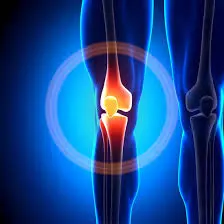
he knee is the largest joint in the body and bears enormous loads every day. When cartilage wears away due to arthritis, injury, or age, bones begin rubbing against each other — causing pain, swelling, stiffness, and reduced mobility.
Dr. Ajay Karwasra begins with the least invasive treatments — physiotherapy, injections, and medications. When these are no longer effective and knee pain severely impacts your daily life, knee replacement surgery offers a highly successful, long-lasting solution. Modern implants last 15–25 years and allow patients to walk, climb stairs, and live actively again.
We Always Try Non-Surgical First
Physiotherapy & Exercise
Strengthening the muscles around the knee reduces load on the joint, improves stability, and can significantly reduce pain in early to moderate arthritis.
Medications & Supplements
Anti-inflammatory medications, glucosamine supplements, and topical gels help manage pain and slow cartilage deterioration in the early stages.
Steroid / PRP Injections
Corticosteroid injections reduce inflammation quickly. Platelet-Rich Plasma (PRP) injections use your own blood to promote cartilage healing and reduce pain.
Hyaluronic Acid Injections
Viscosupplementation lubricates the joint, acting like natural joint fluid to cushion movement and relieve pain for 6–12 months.
Arthroscopic Debridement
Keyhole surgery to clean loose cartilage, remove bone spurs, and wash out the joint. Suitable for younger patients with early-stage arthritis.
Osteotomy (Bone Realignment)
The tibia or femur is cut and realigned to shift body weight away from the damaged part of the knee. Ideal for younger patients with localised arthritis.
Types of Knee Replacement
When non-surgical options are exhausted and quality of life is severely affected, knee replacement surgery offers a permanent, highly effective solution.
Total Knee Replacement (TKR)
All three compartments of the knee are replaced with metal and plastic implants. The gold standard for severe arthritis — 95% success rate with 15–25 year implant life.
Partial (Unicompartmental) Replacement
Only the damaged compartment is replaced, preserving healthy bone and ligaments. Faster recovery and more natural movement than total replacement.
Revision Knee Replacement
Replacement of a failed or worn-out previous knee implant. More complex surgery requiring specialised implants and expertise.
Bilateral Knee Replacement
Both knees replaced in a single surgery session. Reduces total hospital stay and anaesthesia exposure — suitable for select patients.
+91 98966-68944
For Emergency Contact us
🚨 For Orthopaedic Emergencies, Call Immediately — We Are Available 24/7
Appointment
Make An Apointment Now
Frequently Asked Questions
At what age can knee replacement be done?
How long does a knee replacement last?
Is knee replacement very painful?
Will I be able to climb stairs after knee replacement?
What is the difference between partial and total knee replacement?
WHY CHOOSE DR. KARWASRA
Why Patients Trust Dr. Ajay Karwasra
Experienced Orthopaedic Specialist based in Hisar
4.6★ rated doctor with 2000+ verified patient reviews
Located at Shanti Mission Multispeciality Hospital — modern facility with advanced equipment
Personalized treatment — every patient gets an individual care plan
Patient-friendly consultations — treatment explained in simple language
Trusted by patients from Hisar, Hansi, Barwala, Fatehabad & surrounding areas
Our Expertise Years of practice, thousands of cases — delivered with precision.
Expert & Experienced
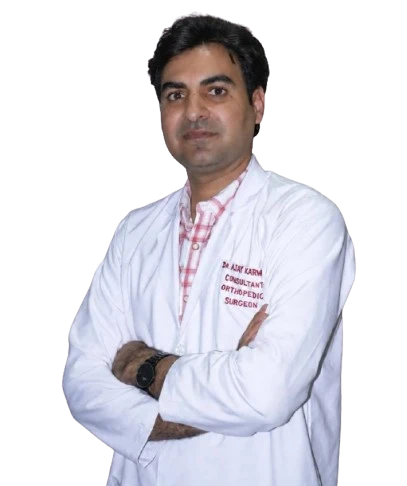
Dr. Ajay Karwasra
MS Orthopaedics Churamani Multispeciality Hospital,Camp Chowk, Hisar, Haryana — Expert care for fractures, joint pain, sports injuries, spine problems & more.
Experienced
15+ Year Experience
3000+ Surgery
Maharaja Agrasen hospital Delhi
3 Year Ex.
Shree Balaji Action hospital in Delhi
3.5 Year Ex.
Primus super speciality hospital Delhi
2.5 years Ex.
Bhagwan Mahavir hospital Delhi
2 year Ex.
- MBBS ( PGIMS Rohtak
- DNB (Orthopaedics) Delhi
- Registered Medical Practitioner — Haryana Medical Council
Hospital Name
PLA Market Churamani Multispeciality Hospital,Camp Chowk, Hisar, Haryana — 125001
OPD Hours:
Monday to Saturday
Morning: 10:00 AM – 2:00 PM
Evening: 5:00 PM – 8:00 PM